Award-winning Data & Insights Agency FD Gazelle winner five years in a row (2020–2024)

Jump on the knowledge train – it departs shortly

Our fans get our latests blogs first:

No logo, no problem? Why McDonald’s dares to advertise without a logo

Having such a strong brand, that you don’t even have to use your logo in advertising materials anymore. 

McDonald’s suggested to be such a brand. At the end of 2014, they launched their gutsy ‘no-logo’ campaign, followed by multiple similar campaigns that did not display their logo. What these advertising materials did contain? Iconic products and a minimalist design. Because, as Pete Heyes, creative director of the advertising company behind McDonald's, said, "McDonald's is a leader."

Read More

The Ultimate Brand Asset Guide: Everything brands need to know about brand assets in 2025 (2026)

From Coca-Cola’s distinctive bottle shape to Nike's 'Just do it' slogan - and from Duracell's tireless rabbit to Vodafone's iconic jingle. These are all examples of distinctive brand assets.

But what exactly is a brand asset to our brain? Why are they indispensable to brands that want to grow and not let their captured market share slip away into the hands of competitors? And how can you quantify the value of brand assets to your brand?

This article has been updated in 2026 with the latest insights.

This guide delivers answers to all these questions - and more. 
I. What is a brand asset?

A brand is not active in our minds most of the day. Only when a buying situation occurs, a few brands will make it into our decision process. To what extent your brand reaches this consideration set is largely determined by the strength of your brand assets.

Would you like to see the complete Brand Asset testing report we made for McDonald's (on our own initiative)? You can download the full research report by clicking the button below (PDF, 7.1 MB).

Download the report

A brand asset is a distinctive visual or auditory cue that activates the brand in the minds of shoppers. Every brand has at least some assets - whether they want to or not. The logo and brand name are among the basic building blocks that give your brand a place in the customer's brain. Brand assets make the logo recognizable and easy to find.

However, the brand logo and name are just the beginning. There exists a strong relationship between brand assets and brand growth: as a brand builds a more solid portfolio of brand assets, market share follows not long after. Byron Sharp describes the science behind how this works in his book How Brand's Grow. Sharp explains that brand assets lead to a brand acquiring a more dominant position in our brains. Put simply, this increases the likelihood of potential customers thinking of this brand in buying situations or - in the case of unplanned purchases - a greater chance of the brand spontaneously catching our eye. 

However, a brand asset doesn’t become distinctive overnight. A requirement for this is that the brand asset is famous and unique. In other words: the asset must be widely recognized as belonging to your brand (Fame), and should not simultaneously activate other brands in the category (Uniqueness). 

Curious how we monitor Fame and Uniqueness? Click here to read more about Distinctive Brand Assets Research & Measurements.

coca cola

I.I. Function of brand assets

Brand assets help your brand gain more ground in the brain. The associative network and the number of neural branches surrounding your brand in the brain increases. This is beneficial for brand growth. The larger a brand's web of associations, the more likely we are to think of it as a customer. This causes the brand to automatically grab attention in buying situations.

Unsurprisingly, new brands still have only weak association networks in our brain. The brand simply hasn't had the chance to attach new associations to it yet. This brand is rarely top of mind. And when we encounter such a brand, we are likely to pass it by unnoticed. This is also true for brands that do not advertise much and therefore have not built up a position in our brain.

The association networks for larger brands with many brand assets look completely different. Whereas newcomers are similar to a lone triangle player in terms of neural activation, a well-known brand ushers in a full associative orchestra in our heads.

The size of the association network turns out to be crucial for the success of a brand. We list the positive effects in the next section.

I.II. Effects of strong brand assets

The association network of a brand acts as a kind of glue to which new associations stick more easily: a neural snowball effect. As a brand has conquered a larger area in our brain, it enjoys several advantages that make it easier to make this area even larger.

  • Shoppers are more likely to think of the brand on their own when they are going to buy something from the category
  • The brand stands out more quickly on the shelf
  • Positive user experiences stick better in the memory (because there is a more extensive associative network to which new associations can attach themselves)
  • Advertisements are more strongly linked to the corresponding brand
  • Brand assets can function in advertisements as independent brand identifiers other than the logo (such as the Nespresso tune, which directly communicates the brand without a logo)

II. Brand Assets and mental availability

Thanks to scientific research we are learning more and more about the neural processes behind the growth of brands. The key mechanism behind market success is what Byron Sharp calls 'mental availability'. Powerful brands are distinguished by possessing a high degree of 'mindshare' in the brain. Branding is literally building and maintaining brand associations in as many brains as possible.

II.I. Brand assets help the brain

Our brain is a lazy organ that has evolved over millions of years to make good choices with as little energy consumption as possible. We operate automatically and use our attention sparingly. In purchasing environments, this leads to 99.99% of all stimuli being filtered out and having no chance of playing a significant role in our choice process. This makes it difficult for brands to break through our natural attention barrier.

Mental availability, which is the size of the associative network of a brand in our brain, is the most important factor that determines whether a brand has a chance of getting a glimmer of attention during the choice process. A larger network results in us thinking of the brand faster when a buying situation arises (good news for planned categories), and also more likely to recognize it when we happen to walk by it (good news for unplanned impulse categories).

Trouwens, we hebben momenteel een actie bij de Unravel Academy.
Verdien direct
€100,- korting op je inschrijving met slechts een paar vragen.

👉 Doe de quiz en claim je korting

III. Byron Sharp on Brand Assets

If you are into branding and marketing, chances are you've heard about, or read, Dr. Byron Sharp's book How Brands Grow. In this publication, marketing professor Sharp dismantles numerous marketing myths that have their origins in gut thinking, supported by empirical counter-evidence. His book has changed many branding strategies and provided it with a more solid scientific basis.

How Brands Grow has brought about a mega change in the world of branding and marketing. More than ever, gut feeling has given way to the use of empirical data to make marketing decisions.

The book maps out which factors are guiding brand growth. Sharp distinguishes between physical availability and mental availability.

Physical availability is the availability of a product. The easier a brand is to obtain, the greater the chance of a purchase. This applies both on macro level (the number of sales channels in which the product is available) and micro level (shelf position and number of facings of the product).

Mental availability refers to the extent to which consumers think of the brand in buying situations. Simply put, the more extensive the memory network of the brand in our brain, the more likely it is that the brand will stand out to us and be remembered.

III.I. Category entry points and Brand Assets

A strong brand memory network is first established by linking the brand to so-called category entry points (CEPs). These are the typical usage moments and contexts (think of Budweiser, which has CEPs such as ‘to drink with friends’ or ‘when I need beer for people that don’t like the taste of beer’), which you can load implicitly and explicitly through advertising.

But even when your brand has conquered the necessary category entry points, it does not mean that you have reached a position in the customer's choice process. The brain is lazy and focuses on easily accessible and/or recognizable brands. This requires brand assets.

Brand assets function like the oil the smoothens the CEP memory network. They make it possible that on the one hand all your branding activities are actually linked to the brand, and on the other hand become active again when the customer is in a buying situation. Brand assets thus act as landmarks for the brand along the many touch points. The more unique and distinctive cues a brand possesses (color, shape, font, slogan, etc.), the greater the chance that an advertisement or packaging for this brand will succeed in capturing our attention.

In short: brand assets give your brand a more valuable position in the mind of the customer. Neurally, a more extensive network is created in the customer's memory, which then can branch out even more widely. There is a snowball effect here: because neural networks intertwine, the more brand assets your brand possesses, the easier it becomes to add more assets and category entry points.

IV. Brand Asset Metrics: Fame and Uniqueness

The strength of a brand asset can be expressed in terms of recognition ('Fame') and uniqueness ('Uniqueness').

IV.I. 1- Fame

Something can only be regarded as a brand asset when it actually relates to your brand. A strong brand asset automatically reminds people of your brand. Byron Sharp calls this the 'Fame' metric. A logo builds fame relatively quickly. A slogan is more difficult and requires long-term advertising campaigns to build a strong brand association. More abstract assets such as color and font take even longer to build fame.

How to increase fame: step up frequency and channels

When an asset is not yet known, the key is to use it consistently in advertising campaigns, ideally spread across multiple channels to reach a large group of category buyers.

IV.II. 2- Uniqueness

Fame by itself is not enough. Even if 100% of category buyers associate a brand asset with your brand, it is still possible that at the same time numerous other brands become active in their minds. We see this occur often in reality, for example, with color assets in the fast-food world. Many fast-food buyers think of McDonald's when they see red, but at the same time, they also think of KFC, Domino's, and Pizza Hut; a lot of familiarities, but little uniqueness.

An asset that scores high on uniqueness owns the brand linkage: its recognition is not shared with other brands.

Increase uniqueness: specificity

Merely showing the asset more often is of little help in building more uniqueness. As long as your competitors use similar assets in their marketing, they will have to share the territory in the customer's mind. The solution here is to hone the asset and thus make it more unique. You can address the original asset in two ways:

  • Making it more distinctive
  • Combine with other assets

Consider, for example, a brand asset such as color: a stand-alone color is difficult to make unique - there are simply too few colors in the pallet - but in combination with other colors or shapes you can create a highly unique overall picture.

IV.III. The Brand Asset Grid: from metrics to practice

When you want an overall view of the strength of your brand assets, the Fame and Uniqueness metrics provide a handy tool to oversee your assets at a glance.

The Brand Asset Grid shows Fame on the vertical axis and Uniqueness on the horizontal axis. This creates four quadrants, each with its own optimal practical route:

Use or lose (high fame, high uniqueness)

These assets make many buyers think of your brand, and rarely of other brands. These assets play a crucial role in the recognition of your brand. Nurture these assets and don't set them aside too easily.

Investment potential (low fame, high uniqueness)

A minority of category buyers link this asset to your brand, but those that do link exclusively to your brand. So, the asset shows great potential, but could still benefit from more and broader exposure among a larger audience.

Avoid solo use (high fame, low uniqueness)

Many category buyers associate this asset with your brand, but at the same time with many other brands. They symbolize the overall category more than a single specific brand. The solution is not to use these assets stand-alone, but to make them more unique by always showing them combined with other assets. For example, only the color does not make a brand recognizable, but the combination of shape and color immediately evokes the right association.

Ignore or test (low fame, low uniqueness)

These assets are currently of little value to your brand. If the asset has been around for years, this is a sign that it can be replaced without any problems (ignore). If the asset is new, it is a sign that it needs further research to establish its potential (test).

Do you want to know how your brand assets score in this matrix? We've got you covered via our specialised Brand Assets Research toolkit. 

brand assets fame en uniekheid

V. Types of Brand Assets

Brand assets come in many shapes and sizes. Literally, any sensory cue that can be used by your brand on a consistent basis is a suitable candidate. Below, we list the most common brand assets.

V.I. Color(combinations)

When thinking of typical brand assets, we are quick to jump to color: McDonald's yellow, Coca-Cola red, and Cadbury purple. And while color can leave a strong mark on the attractiveness and experiential value of these brands, a stand-alone color is rarely a distinctive brand asset. The reason lies in the lack of uniqueness: the handful of possible colors are shared by a huge number of brands, often even within the same category. And looking for distinction in a specific hue is often out of the question; few people can spontaneously see the difference between McDonald’s and Coca-Cola’s shades of red.

So, color mainly plays a role as a supporting brand asset in combination with more unique brand assets like shape and typography. Color can also be combined with other secondary colors for a stronger - but still not too strong, on itself - recognizability.

V.II. Shape

Forms are one of the most important brand asset categories in that they can quickly reach high levels of fame and uniqueness. From Nike's swoosh to ‘WC-Eend’s’ recognizable packaging shape.

The effective usage of shapes can be found in logo design (the bite from the Apple logo), supporting symbols (the Kellogg’s rooster), and finally, the product or packaging shape itself (the Coca-Cola bottle).

V.III. Jingles

 When we think of brand assets we often think of visual cues, but in principle, there are assets conceivable for every sense. Jingles are through the combination of sound and (optionally) speech extremely suitable to build distinctive brand assets.

V.IV. Slogan

The textual extension of the jingle is the slogan, which plays a key role in both advertising and on-pack communication. Slogans also have a high potential for gaining fame and uniqueness, provided the imagination of the creator actually breaks new ground.

V.V. Songs/sounds

Music has the potential to become a strong brand asset, as long as it is used exclusively by one brand. A brand that uses popular songs in its commercial therefore only contributes sparsely to recognition with its choice of music. Therefore, large successful brands prefer to compose their own music, so that each note contributes maximally to the value of their brand asset portfolio.

V.VI. Celebrities and characters

When celebrities show up in advertising campaigns for long periods, the celebrity itself can become a brand asset. For example, we saw this happen with Nespresso, a brand that has been able to snag George Clooney for almost two decades. 

However, the celebrity as a successful brand asset is the exception rather than the rule, as celebrities usually feature briefly in campaigns (bad for fame) or pop up in numerous other brands (bad for uniqueness). A safer choice is to develop a character as a brand (such as Ronald McDonald), which can easily be made unique and can be played by multiple actors so that continuity is guaranteed.

V.VII. Scent

The nose is an undervalued sense in marketing. It is because of this that scent offers an exceptionally strong opportunity to develop a distinctive brand asset. Brand scents are becoming more and more common in the service industry (hotels, restaurant chains, airlines, clothing stores), but also the packaging of products offers opportunities for scent marketing. We have known it for decades in the automotive world - where each new car is accompanied by its own distinctive scent - but a unique brand scent applies to the unpacking ritual of any product.

VI. Practical implications for branding and marketing

Brand assets do not appear out of thin air. A strong asset portfolio starts with a smart selection of distinctive brand assets combined with long-term and consistent implementation of these assets along as many touch points as possible.

For the branding practice, here are three important tips to build your assets purposefully and quickly.

VI.I. Build asset by asset

Our brain is most able to create new memory traces when it is given small pieces of new information to process within a familiar context. The implication of this for the practice of brand assets is simple: introduce your assets one at a time.

A simultaneous introduction of a new slogan, jingle, visual rebranding, and new color profile may feel like the best road to attention, but at the end of the day, it pleases the brand manager who wants to put a personal stamp on the brand at all costs.

It is more effective to introduce assets step by step. For each new asset, you monitor the increase in awareness and uniqueness (see next section on brand asset research) and adjust where necessary in output, channels, and frequency of use.

VI.II. Be consistent

Your own brand quickly gets boring. That is why brand and marketing managers often feel the temptation to throw all the distinctive features of the brand overboard every few years and start with a clean slate.

We strongly urge: don't give in to this temptation.

It takes years to build strong brand assets. Once matured, these brand assets provide a lifelong contribution to the recognition of your brand and the ability to create new assets faster. The larger the memory network of your brand, the easier it is for additional associations to stick to it; this is the snowball effect of brand assets.

So, it's important to give your brand assets the time to mature in terms of familiarity and uniqueness. Monitor your brand assets to get an objective view of which assets play a key role in the recognition of your brand. These are the assets you want to be careful with. Changes are allowed as long as they do not dent the fame and uniqueness of the asset.

At the same time, brand asset monitoring also reveals which assets do not contribute to the recognition of your brand at all. These assets are begging to be sharpened or replaced. So, there is definitely work to be done by the brand and marketing manager; however, you need to be clear about which direction you want to channel this creativity.

mcdonalds brand asset

The McDonald's logo has remained very consistent in recognizable elements over the years

Click here to go to the blog which explains why McDonald's dare to advertise without a logo.

VI.III. 3- Don't put meaning first

Some brand managers believe that every part of the brand must be meaningful. 

This wisdom certainly holds true for many brand associations. For example, category entry points of a brand are only valuable when they tie into a real existing use case among potential customers.

However, brand assets are an exception to the rule for meaningful brand communications. They serve as cues that make the brand known and distinctive, and these are therefore the two measures against which you should measure the suitability of a brand asset. Does the asset have the potential to generate familiarity? And is it distinctive compared to other players within the category? If so, you have a good candidate.

A meaningful asset is a nice bonus (like the soft Puppy on the soft Page toilet paper), but it is not a prerequisite for the brand asset to perform its core task: anchoring the brand firmly in the mind of the customer. Nike's swoosh and Apple's brand name could easily have been shot down for their lack of surface level meaning, but their legendary status proves that a good brand asset does not require meaning (and meaning does not automatically make a good brand asset).

VII. Measuring Brand Assets

How do you measure the strength of your brand asset portfolio? There are several relatively simple research techniques you can use to get a clear and objective overview of your brand asset portfolio.

A brand asset survey aims to quantify the two most important metrics of a brand asset: fame and uniqueness.

The basic test shows a brand asset, where respondents write down all the brands that come to mind. In doing so, the category is promoted, but no further information is given. This setup (spontaneous recognition with promoted category) has been shown by validating research to be the most predictive and reliable (Romaniuk & Nenycz-Thiel, 2014). The asset can be shown both stand-alone and in conjunction with other assets. This provides insight into which assets can stand on their own to make the brand recognizable, and which assets need the context of other assets.

A brand asset test takes place with 100-200 respondents per cell. This provides reliable results (i.e., if you would have done the test at the same time with a sample other respondents, the results would be the same). Curious how we investigate this? Click here to read more about Distinctive Brand Assets Research & Measurements.

brand assets grafiek 2

VII.I. Metric: Fame

The fame of an asset can be calculated as the percentage of respondents that associate the asset with the target brand.

For example, 100 out of 150 respondents think of the target brand when they hear the slogan. The asset scores 67% (100/150) on Fame.

VII.II. Metric: Uniqueness

The uniqueness of an asset can be calculated as the number of times the target brand was mentioned, divided by the total number of mentioned brands. When an asset often reminds of multiple brands, it scores low on uniqueness.

For example, the slogan was linked to the target brand 100 times. Some respondents (also) linked back to other brands; in total, another brand was mentioned 70 times. The asset has a uniqueness of 59% (100/170).

VII.III. Implicitly measuring brand assets with neuromarketing

The metrics Fame and Uniqueness can be asked indirectly through online survey research. In addition, two more in-depth neuromarketing research methods are available to gain deeper insight into the strength of brand assets. These methods use reaction times as a measure of the strength of an association and thus tap into the more unconscious processing of the respondent.

Recognizability with the Blur Test

In the Blur Test, a brand asset appears blurred on the screen, then slowly becomes sharper. The respondent has to click from multiple-choice options to which brand this asset belongs. The blurred display closely resembles the initial automatic processing our brain performs when we process information in the supermarket. Based on the average reaction time, we gain insight into the unconscious recognition of brand assets.

Subconscious associations with Intuitive Response Test (IRT)

If you want to test the extent to which a brand asset strikes the desired associative or emotional chord, the Intuitive Response Test (IRT) offers a solution. This test is considered a faster version of the famous Implicit Association Test (IAT). The underlying mechanism is the same: based on reaction times to a categorization task, we gain insight into the actual unconscious association between a brand asset and a desired characteristic.

VII.IV. Have a brand asset survey carried out

When you want quick and clear insight into the strength of your brand assets, Unravel Research offers a form of research that quickly gives you the information you are looking for. The brand asset research consists of a basic test (aimed at Fame and Uniqueness), which can optionally be extended with a Blur Test (aimed at recognizability) and an Intuitive Response Test (aimed at unconscious association).

VIII. Books on Brand Assets.

The concept of the measurable Brand Asset as a driver of brand growth has found its way into the marketing world thanks to the books of Byron Sharp. Within the How Brand's Grow series started by him, the following publications are currently available:

how brands grow

How Brand Grow, part 1

Byron Sharp

                  how brands grow 2

How Brand Grow, part 2

Jenni Romaniuk and Byron Sharp

                 distinctive brand assets

Building Distinctive Brand Assets

Jenni Romaniuk

IX. Update on Brand Assets in 2025

Scientific research into Distinctive Brand Assets is evolving continuously. In this 2025 update, we share the latest insights.

IX.I. Which types of brand assets are easy or difficult to grow?

As more and more brands evaluate their brand assets in terms of fame and uniqueness, we're gaining a clearer picture of which assets can grow quickly—and which ones tend to develop more slowly.

IX.II. ASSETS THAT TYPICALLY GROW QUICKLY

  • Logo
  • Mascots / Brand characters
  • Sound logos / Jingles
  • Shapes and symbols (like Toblerone’s packaging)

For brands, this practically means that you definitely want to have these asset types—and ideally apply them consistently in your communications.

IX.III. ASSETS THAT TYPICALLY GROW SLOWLY

  • Color
  • Typeface
  • Celebrities
  • Slogans

While these asset types grow more slowly, that doesn’t make them unimportant. If your brand scores highly on fame and uniqueness for one of these, it becomes especially important to handle them with care when considering any changes. You don’t want to discard something that’s fought its way—through years of consistent use—into the most valuable quadrant of brand assets.

X. References

Romaniuk, J., & Nenycz-Thiel, M. (2014). Measuring the strength of color brand-name links: The comparative efficacy of measurement approaches. Journal of Advertising Research54(3), 313-319.

Romaniuk, J. (2018). Building distinctive brand assets. Oxford University Press.

Sharp, B., & Romaniuk, J. (2016). How brands grow. Oxford University Press.

Ward, E., Yang, S., Romaniuk, J., & Beal, V. (2020). Building a unique brand identity: Measuring the relative ownership potential of brand identity element types. Journal of Brand Management, 27(4), 393-407. 

Read More

EEG, Neuromarketing

XI. Starting with EEG neuromarketing research? Here are three questions you should always ask your research vendor

With the upsurge of neuromarketing research, it’s more and more common for marketers to let brain waves optimize their ads, stores, products and websites. In order to do so, the research method used most often is Electroencephalography (EEG). This is a method that captures brain activity by isolating electrical activity through electrodes on the scalp.  

Read More

EEG, Neuromarketing

XII. A complete overview of: International Neuromarketing Companies

Do you want to know which companies play a key role in the field of neuromarketing internationally? Local (neuromarketing) research agencies can be great. But sometimes you need a research partner who has their ‘toes’ in multiple markets. Read on to find a comprehensive overview of many different neuromarketing vendors, their specialisations and techniques. 

Read More

XIII. 5 Neuromarketing Examples to Help You Create Better Commercials

We have some shocking news for you.

1 out of 5 advertisements causes a drop in sales (Jones, 1995). Think about it; you just spent millions of dollars on media budget to broadcast the perfect ad. But after several months of airtime for your masterpiece on national TV, you don't see the numbers soar. 

Read More

EEG, Neuromarketing, eye tracking

XIV. Three neuromarketing tips to increase the impact of your folder

Folders. They are still a trusted physical medium to be able to display your assortment to the customer.

But how do you ensure that your folder is being read by the customer? How does the layout of your folder ensure that sales becomes even more attractive? In short: how does an effective folder differ from waste paper?

Read More

Neuromarketing

XV. Neuromarketing: everything you need to know in 1 overview (2026)

What is neuromarketing exactly? Is it always research? Or is it also the application of insights from psychology?

It can be quite a job to get a good overview of this beautiful field. But don't worry, that's why we wrote this 'fundamental blog' for you. From here you get a concise overview of everything around 'neuro', with links to pages that go into more depth.

This article has been updated in 2026 with the latest insights.

From research, to training, and our favorite insights. You have come to the right place! 

 Since this has become quite a long article, I added a table of contents. This way you can quickly go to the part that is important to you.

This article is, of course, a good starting point. But do you want to know what the complete Fundamentals of neuromarketing are? And do you want to call yourself a true neuromarketeer? Then take a look at our online Complete Neuromarketing Essentials course!

Watch The Online Neuromarketing Training

I. What is Neuromarketing?

Neu-ro-mar-ke-ting. A newspaper article here and a radio item there. You can hardly ignore neuromarketing anymore. Shortly stated, with neuromarketing you dive into the brain of your consumer. And this is certainly not an unnecessary luxury, since human decision-making largely happens subconscious.
Let's start with the definition we use at Unravel:


I.I. A definition

'Making good marketing and communication even more effective, through psychology and neuroscience'.

That’s a mouthful. 

Strangely enough, these are two worlds that have come together, especially recently. Originally, the term 'neuromarketing' only meant doing research into brain responses on marketing actions. The word "marketing" also implies an active role of a neuromarketeer. Not just research, but also improvement. In this blog we will elaborate on this: 'What is Neuromarketing and Consumer Neuroscience?'

Nowadays we see more and more that the term is also used for its application; making marketing even more effective through insights from psychology and brain sciences.

Booking.com is a good example of this. They apply many psychological principles from the social sciences, with the aim of increasing sales and conversion. Meaning that they do not research the brain, but they do apply the insights that come from this research.

Smart marketeers will of course test whether such a psychological insight actually leads to more sales. Another word for this is conversion optimization. And that's where Tom and I started almost 10 years ago. Neuromarketing as an application: more conversion and turnover through the application of behavioral sciences. This is what our sister company Unravel Behavior is still doing.

We soon delved into research into the brain. Unravel Research was born (although we then called ourselves 'ST&T Research'). Of course still with the same vision: 'Making good marketing even better'.

In addition to seeing how people react emotionally and subconsciously to websites, shops and advertisements, we also give advice on how to make this even better. Good marketing starts with your intuition, a gut feeling. Marketing that is even better then investigates whether something actually works.

It is not without reason that we have this text hanging in our office: 'Van Onderbuik, Naar Onderbouwd', meaning “From Gut Feeling, To Substantiated”.

I.II. What applications are there?

Looking into the brain sounds fun, of course, but it must also serve a purpose. Most companies conduct research to know whether something will work or not in advance.

Imagine that you have an advertising budget of a few hundred thousand euros, but you are not sure whether after seeing your ad, people will actually buy your product. Previously, consumers were asked whether they would buy the product after seeing the advertisement. This only answers the rational reasons why someone buys something. Nowadays we know that the majority of our decisions (especially in the supermarket) are made in a reflex way. Unconsciously.

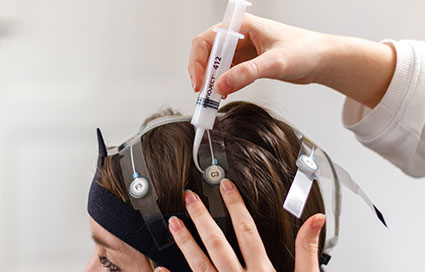
Thus you must also measure this unconsciousness. With EEG brain scanners you can take a look into this unconsciousness, in our true center of choice: the brain. Neuromarketing research is often used in the following areas:

Is Neuromarketing Ethical?

Investigate the unconscious. It may sound slightly scary. Many people therefore wonder whether Neuromarketing is ethical. We think so. Because it is not so much about the tool you use, it is more about what you use it for. As with everything else. My colleague Tom wrote a blog about this: https://www.unravelresearch.com/en/blog/is-neuromarketing-ethical.

I.III. What research techniques are there?

EEG, fMRI, IAT. The terms and abbreviations are in abundance. Fortunately, it doesn't have to be complicated. 

You want to have the right tools and techniques at your disposal to predict behavior. Sometimes you want to look at behavior for that (behavior is of course the best predictor of future behavior). But sometimes you want to go a little deeper, into the unconscious level.

  • EEG. Measures brain waves and converts them into reliable metrics and emotions.
  • fMRI. An indirect method to measure brain activity (shows where oxygen-rich blood flows).
  • IAT. Measures how strong an association is between two concepts (e.g. a brand and their brand promise) by means of reaction speed.
  • Eye tracking. Measures where and how quickly someone looks at something.
  • Biometrics. Measure physiological responses.
  • Emotion recognition. Measure emotions based on facial expressions.  

I.IV. Brainmetrics

What can you see when you look into the brain? With EEG you can measure direct brain activity via brain waves. Scientists from all over the world are conducting fundamental research into these brainwaves. Because one change in brain activity is not the other.

Each time again, the following validated metrics emerge from these studies:

  • Desire. If it is high, we see an approach motivation, if it is low, we see an aversion motivation. This metric is most closely related to purchasing behavior. The scientific term: prefrontal asymmetry.
  • Engagement. Active when something is personally relevant.
  • Workload. Measures whether something is too difficult or too easy for the brain.
  • Confusion. Measures whether something happens that is not expected.
  • Synchronicity. Measures whether several participants experience the same thing at the same time. The more synchronously the brain responds, the better.

Would you like to delve deeper into these metrics? Read our blog: Which EEG metrics do we use to analyze brain activity in neuromarketing research?

And are you curious how you subsequently analyze these metrics? Then check out: Data analysis of EEG in neuromarketing research

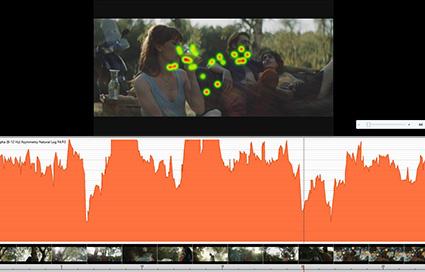
Here's a sneak peek of what such a metric looks like. In this example we have highlighted the emotion 'desire':

EEG low point TVC

II. Case Study

All this information obviously makes you even more intrigued. Because how exactly do you go from gut to substantiated ?? We have written quite a number of interesting cases about this. You can find an overview here: https://www.unravelresearch.com/en/cases.

 YouTube Video Testing - Nutricia Olvarit 

Happy Eyes Commercial - Pearle 

Predict box Office hits - Movie Trailers 

Back to the table of contents ↑

Trouwens, we hebben momenteel een actie bij de Unravel Academy.
Verdien direct
€100,- korting op je inschrijving met slechts een paar vragen.

👉 Doe de quiz en claim je korting

III. Neuromarketing Research

Many well-known brands such as Heineken, McDonalds and Albert Heijn are already conducting neuromarketing research. They know that you have to look into the brain to see if something is actually working or not.

Fortunately, we have seen a real advance in recent years. More and more marketeers experience that their current research methods are not bringing them the (complete) truth. People simply don't do what they say or say what they do.

The most important question is of course how to do good research. Fortunately, the Netherlands is ahead of its time in this field. For example, we have almost as many neuromarketing agencies as our neighbors across the sea. Because I don't like to pretend we are the only ones in this field, we have made an overview of all Neuromarketing agencies in the Netherlands here. Of course I hope to leave a good impression with this article.

It all starts with the right research question and the method that matches it. Lets start with the fact that neuromarketing should certainly not be seen as a replacement for traditional research. Each research question has its own most suitable method. Here we explain when neuromarketing is preferable to traditional research, but certainly also when this is not the case.

III.I. Fun neuromarketing examples

There are a lot of fun examples. And because we are so enthusiastic about it ourselves, we have written a few blogs about it. Lots of reading and viewing pleasure:

The Frog Effect. How to connect Stores and Advertising with Neuromarketing Research

What Happens in the Brain When You... Gamble? 

What Happens in the Brain When You... Unbox an iPhone?

IV. Applied Neuromarketing 

Do you already know the 'exam effect'? In one of our usability studies we saw something special. Invariably, if a user forgot to fill in a field in the check-out form, this user got a red error message. And invariably when she saw that red error message, we saw an emotional dip in the brain.

A hypothesis was soon born. Would people associate a red color in the error message with an unrecoverable error? Just like in an exam, where your mistake was marked with a red pen. 

We tested this hypothesis in an A / B test. In such a test you divide all website visitors 50/50 into group A and group B. Group A will see the website as it always was, with a red error message. Group B will see the website with a small adjustment: an orange error message:

blog

Afterwards, you see which of the two groups places an order more often. In this case we saw that the group with the orange error message (group B) placed an order up to 15% more often.

In other words, the red error message in group A caused an emotional block, and 15% less turnover.

This is a typical example of applied neuromarketing.

Originally, the term 'neuromarketing' was only used for research. But this meaning has broadened somewhat in recent years. Not surprising, because like you already read above, many insights from this research are used in other areas.

In our review article of agencies, we've also created a special headline for agencies that focus on the application of neuro:

https://www.unravelresearch.com/en/blog/overview-neuromarketing-agencies-in-the-netherlands

? Back to the table of contents

IV.I. Learn everything about Neuro

Every day new insights are added. It happens this often that we have started a blog: New Neuromarketing. In which we translate the latest insights from neuroscience into practical marketing implications.

The smartest thing is of course to start with the basics. Where can you learn neuromarketing?

This is a question we were asked very often. What is the best training? Do you absolutely have to go to university, or is an online training good enough?

If you are studying at the moment and want to choose another master? There are Dutch masters focussed on neuromarketing. However, there is a disadvantage to these educations. We only found out about this later. There is too much focus on unimportant matters and too little practical application.

That is why something new has emerged from within our company. Our own: Unravel Neuromarketing Academy.

Practical (online) training, to the point and directly from the source, based on scientific and own research.

IV.II. Online Neuromarketing training / courses

Which courses are there? We have made an overview especially for you:

The Complete Neuromarketing Essentials (ENG)

The Master of Retail Psychology & Shopper Neuroscience (Dutch)

Neuromarketing Reclame Training (Dutch)

IV.III. Neuromarketing Blogs

Some blogs publish brand new content. Others apply existing knowledge creatively in a new way. Both perspectives are - in our opinion - super valuable.

NewNeuromarketing.com > This blog comes from within our company. In it we publish the latest insights from neuroscience.

Our own Unravel Blog (ENG) > A mix between new insights and creative applications of existing knowledge.

Frankwatching (Dutch) > All blogs that have the 'tag' Neuromarketing.

NMSBA Blog (ENG) > The NMSBA is the 'business association' of neuromarketing companies.

Neuroscience Marketing (ENG) > a blog by Rodger Dooley, author of Brainfluence

iMotions (ENG) > The blog of one of the largest software suppliers in the (unconscious) research field

The Science of Persuasio> Not only about neuromarketing, but also about social psychology

IV.IV. We recommend these books:

Our bookcase is filled up with good, and unfortunately also less good, books. We have made a selection of the best. This way you immediately know which books you should read. Are you unsure about a book and it is not on this list? Then we probably read it, but we didn't like it very much. Our advice? Better leave it there.

Also read our blog with 9 books about Neuromarketing that you really must read.
Our applied psychology for marketing book list:

  • Decoded - Phil Barden
  • Persuasive Advertising - J. Scott Armstrong
  • Influence - Cialdini
  • How Brands Grow - Byron Sharp
  • The Psychology of Advertising - Fennis en Strobe
  • Thinking Fast and Slow - Daniel Kahneman
  • Neuro Design - Darren Bridger
  • Hooked - Nir Eyal
  • Contagious - Jonah Berger
  • Evil by design - Chris Nodder
  • Hidden Persuasion

Our neuromarketing research book list:

  • Introduction to neuromarketing and consumer neuroscience - Dr Thomas Ramsoy
  • Neuromarketing for dummies - Peter Steidl (don't be put off by the title, it's a really nice overview)
  • Persuasive Advertising - J. Armstrong (nice overview of evidence-based persuasion techniques)
  • The ebooks on https://imotions.com/guides/ are also very valuable if you want to learn more about what you can acchieve from our research techniques.
  • And of course www.newneuromarketing.com for the latest insights from psychology.

IV.V. Podcasts:

These podcasts often release new content:


Read More

Neuromarketing

V. 5 ways how marketeers make use of your irrationality

Are you convinced that you are walking rationally down the shopping street? Well, read on then ?.

Clever marketers have known something about you for years that you may not even know yourself.

Read More